



Join Our Newsletter
Free US Shipping On Orders Over $99
Free US Shipping On Orders Over $99
Liquid error (snippets/mobile_header line 107): include usage is not allowed in this context
Free US Shipping On Orders Over$99
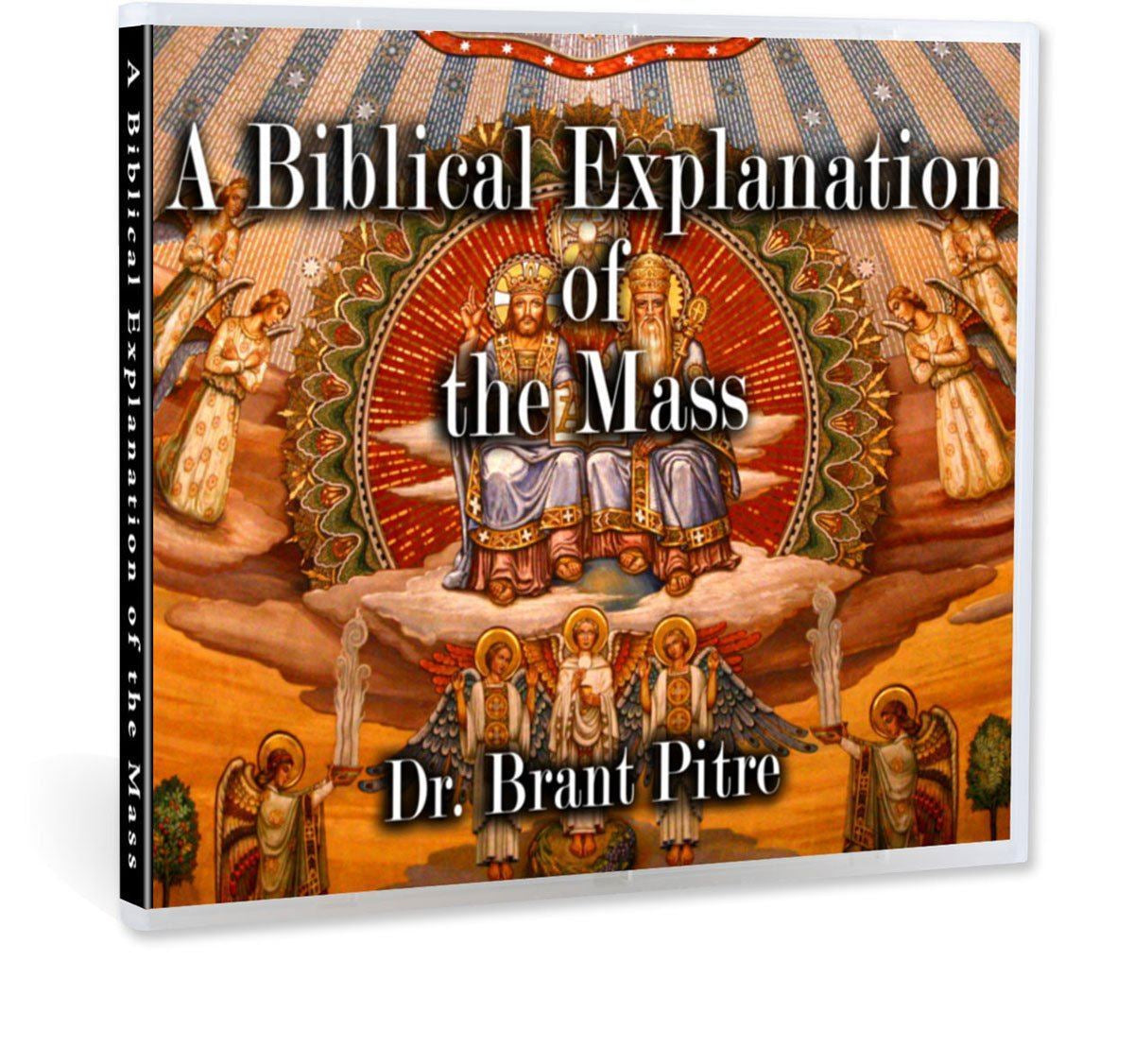
A Biblical Explanation of the Mass — CD
$ 8.95

A Biblical Explanation of the Mass

Gabrielle Lee Verified Buyer
Love learning from Dr Pitre. He explains things so well. I’m a new Catholic so it was especially helpful!

A Biblical Explanation of the Mass


• Why do we do what we do at Mass? 
• How is Scripture the key to unlock the parts of the Mass?
• What should be going on interiorly during Mass?

$ 8.95

| /

CP 168

Rendering loop-subscriptions
Bundle & Save
See more bundles
Volume Discount
See more discounts

Loading...

Customers Who Ordered This Also Got

  • 1 hour 18 min. (1 CD / 1 DVD / MP3)

    Have you ever wondered why we do what we do at Mass? Why do we rise when the Priest enters the sanctuary? Why make the Sign of the Cross at the beginning and end? Why do we sometimes sit, sometimes stand, and sometimes kneel? And what is the meaning of the various prayers and responses that fill up our weekly hour of worship?

    In this Bible study, Dr. Brant Pitre takes you on a biblical tour of the Mass, using Sacred Scripture and ancient Jewish tradition to show you the biblical roots of the various parts of the Catholic Mass. Along the way, you’ll learn such things as:


    • How Mass tells us that we are entering into the “Tabernacle” of Moses in order to meet God
    • Where the “Sign of the Cross” can be found in the Old Testament
    • Why the two blind men cried out, “Lord, Have Mercy” (Kyrie Eleison) and what should be going on inside of us when we cry out with them
    • Where the “Glory to God in the highest” (the Gloria) comes from in the Bible, and why we sing it during some seasons (Ordinary Time), but not during others (Advent)
    • Why we stand for the Gospel reading, and where the practice of biblical homilies can be found in Scripture
    • Where the “Holy, Holy, Holy” (the Sanctus) comes from in the Bible
    • And much more…


    According to Pope Benedict XVI, in order for Christians to actively and fruitfully participate in the Mass, they must understand “the meaning of the signs contained in the rites” (Sacrament of Charity, 64). In this revealing presentation, Dr. Brant Pitre heeds Pope Benedict’s call by explaining the biblical meanings of the Mass’s most significant moments, so that you can enter more fully into this most sacred of Mysteries.


    *Note from Catholic Productions*

    While there is overlap between this series and The Biblical Roots of the Mass: A Scriptural Explanation of the New Roman Missal, there is significant dissimilarity both in content and in focus. Nevertheless, we wanted our patrons aware that there will be some overlap between this and the aforementioned set.


  •      
  • Yotpo

Further Study Details & FAQ

A closer look at the biblical texts and sources behind this study, for those who want more detail before purchasing.

Key passages & sources examined: The scriptural roots of each part of the Mass — the procession as Moses entering the Tabernacle (Exodus 33), the Levites' daily psalms and the reading of the Law (Nehemiah 8), Isaiah 6 and Revelation 4 (the Sanctus), Solomon's fire from heaven (2 Chronicles 7), and the Last Supper (Matthew 26) — with the Catechism.

What Bible passages does this study connect to the Mass?

It traces the parts of the Mass to Scripture — for example Exodus 33, Nehemiah 8, Isaiah 6, Revelation 4, 2 Chronicles 7, and Matthew 26 — showing where each one comes from.

Does it use ancient Jewish worship, not just the Bible?

Yes — it draws on ancient Jewish Temple practice, such as the Levites' daily psalms, to illuminate the Liturgy of the Word and the Eucharist.

How does this differ from 'The Biblical Roots of the Mass' study?

The two overlap but differ in content and focus; this set is a biblical 'tour' of the Mass, emphasizing what should be happening interiorly at each moment.

Is this suitable for individual study or a group?

Both. It works well for personal study, RCIA, or parish groups.